
Understand the AI shift
See artificial intelligence as more than a tool or trend. Understand it as a structural force reshaping work, power, education, economics, institutions, and civilization.
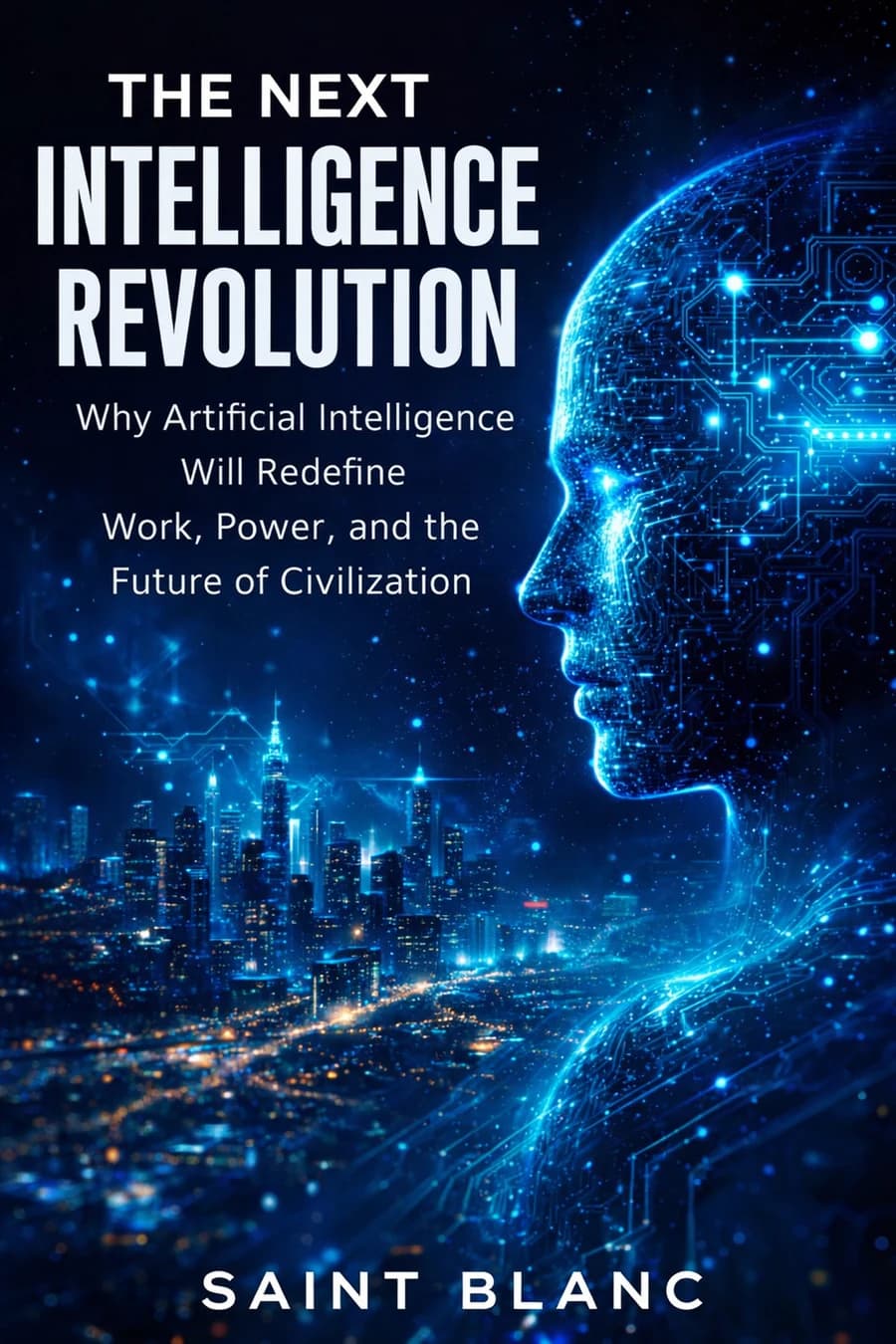
Book One in The Next Intelligence Revolution Series
The Next Intelligence Revolution is an artificial intelligence book for readers who want to understand how AI may reshape work, power, education, economics, civilization, and human responsibility.
As the first book in The Next Intelligence Revolution Series, it gives professionals, students, educators, entrepreneurs, and general readers a clear framework for thinking about the intelligence era before the changes become impossible to ignore.
Book 1
Foundation of the TNIR series
AI
Work, power, education, and society
Future
A framework for what comes next
What Readers Gain
See artificial intelligence as more than a tool or trend. Understand it as a structural force reshaping work, power, education, economics, institutions, and civilization.
Move past fear, hype, and surface-level predictions. Build a deeper framework for what AI may change and what human beings must still protect.
Explore how careers, skills, organizations, industries, and leadership may evolve as intelligent systems become part of everyday decision-making.
Understand how AI may influence governments, corporations, institutions, creators, workers, and ordinary citizens.
Why This Book Matters
Every major technological shift changes how societies organize work, knowledge, wealth, and authority. Artificial intelligence may be different because it touches intelligence itself: how decisions are made, how knowledge is produced, how labor is valued, and how people understand their place in the future.
The Next Intelligence Revolution gives readers a foundation before they move deeper into the rest of the series. It sets up the questions that continue through the later books: the intelligence economy, autonomy, the human edge, and the world of 2040.
Core Themes
Who This Book Is For
Reader Decision
This book is for readers who want more than quick predictions. It gives you a framework for understanding how artificial intelligence may reshape work, education, institutions, power, and human responsibility.
After reading, you will be better prepared to follow the rest of The Next Intelligence Revolution Series and think clearly about the choices society is making now.
Support the Book
Reader reviews help new readers, educators, professionals, and future-focused audiences discover the book. If the book helped you think differently about artificial intelligence and the future, consider leaving a review after reading.
Series Foundation
Book 1 introduces the intelligence revolution. Book 2 moves into the intelligence economy. Book 3 examines autonomy. Book 4 explores human intelligence versus machine intelligence. Book 5 looks toward the world of 2040.
Together, the series is designed to help readers understand not only what AI is, but what kind of future it may create and what role human beings still have in shaping it.