
See where value moves
Examine what happens when firms can expand their capabilities without expanding their workforces at the same rate—and ask who creates value and who captures it.
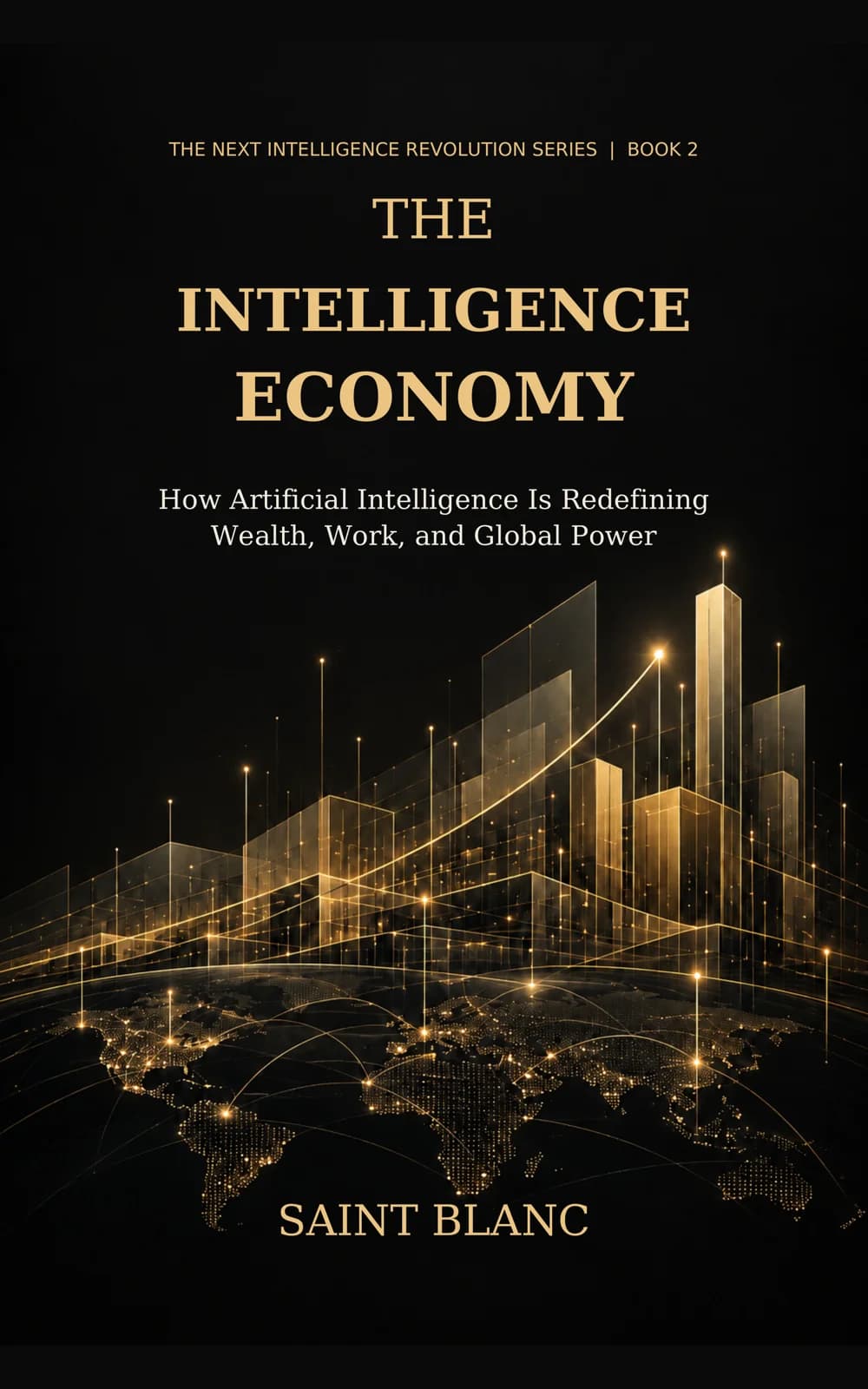
Book Two in The Next Intelligence Revolution Series
The Intelligence Economy examines how artificial intelligence is redefining wealth, work, and global power.
Artificial intelligence is becoming more than a powerful tool. As intelligence can be produced and scaled through machines, the book asks how value is created, who captures it, and how economic opportunity may change.
Book 2
The next chapter of the TNIR series
Work
Labor, wages, and business models
Power
Markets, infrastructure, and nations
What Readers Gain
Examine what happens when firms can expand their capabilities without expanding their workforces at the same rate—and ask who creates value and who captures it.
Explore how AI may affect labor, wages, pricing, business models, and the organization of work.
Consider the growing importance of data and computing infrastructure, along with the risk of concentrated economic power.
Build a framework for the choices facing workers, businesses, and nations as intelligent systems spread.
Why This Book Matters
If firms can scale their capabilities with AI, the consequences extend beyond technology. The Intelligence Economy explores what that shift could mean for labor, pricing, ownership, and the concentration of economic power.
Book Two builds on the series foundation and turns to the economic choices facing people, businesses, and nations.
Core Themes
Who This Book Is For
Reader Decision
The Intelligence Economy offers a way to think about changes in work, wealth, business, and power. It invites readers to look beyond the systems themselves and consider the choices that will shape how their benefits are shared.
Support the Book
Reader reviews help others discover the book and continue the conversation about the future of the economy.
The Series Continues
Book 1 introduces the broader AI shift. Book 2 follows its economic consequences for work, wealth, and power. Together, they invite a closer look at the future being built around intelligent systems.